FOSDEM 2026
FOSDEM is a collection of mini-conferences. Anyone can apply to run a developer room, or a “mini-conference”, and if you get accepted then you are responsible for reviewing talk suggestions and setting up the agenda for that room. Here’s an interesting blog post by Wikimedia about how this works: Organizing and running a developer room at FOSDEM. FOSDEM is therefore a very nice conference to bring friends and colleagues to. It’s very hard to not find something that sparks your interest. This year my goal was to catch a few of the talks about Nix, and to learn more about how to manage HPC clusters at work. Below are some of the highlights.
Talk Highlights / Developer rooms
HPC, Big Data & Data Science
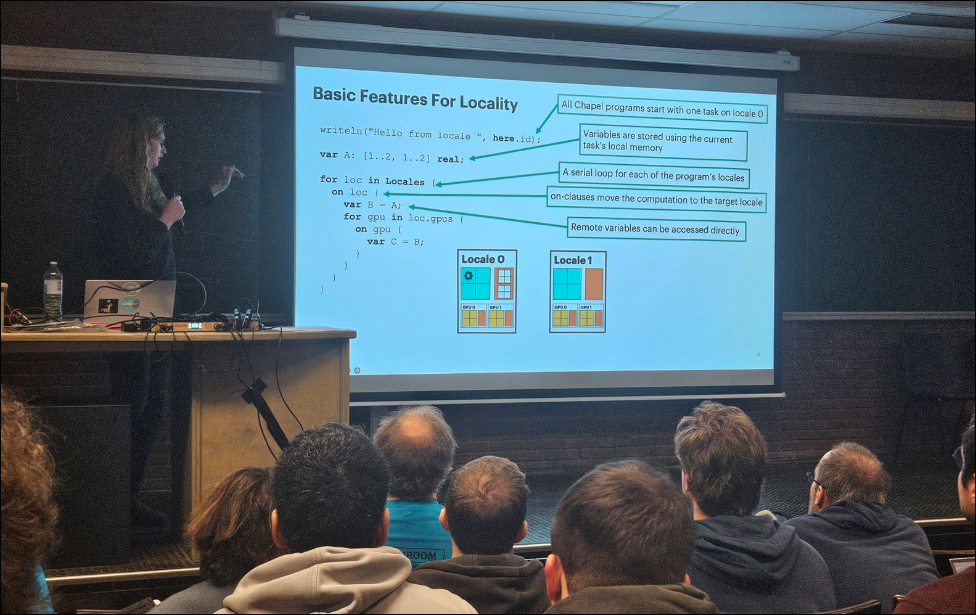
Productive Parallel Programming with Chapel and Arkouda
I liked this one! I don’t have experience with low-level distributed computing, but Chapel sounds like a very nice higher-level language to deal with the problems that were traditionally solved with C+MPI/OpenMPI and the likes.
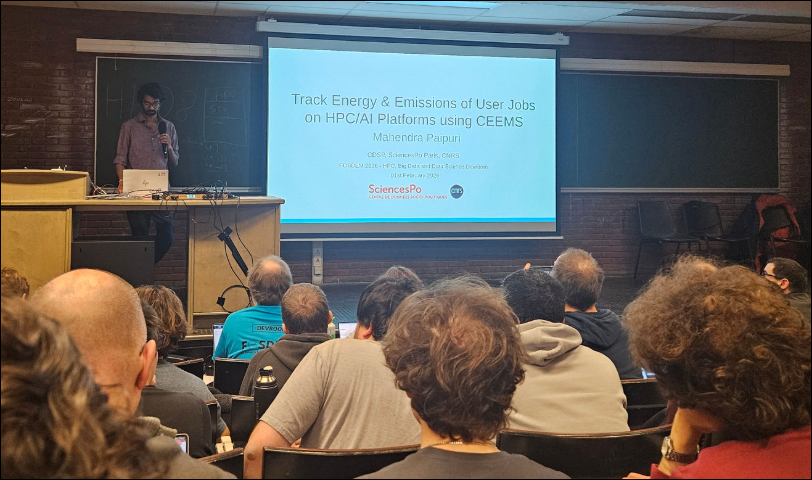
Track Energy & Emissions of User Jobs on HPC/AI Platforms using CEEMS
I deal with SLURM clusters at work, and one of the problems we’re currently not solving is how to track usage of the cluster back to the user groups to assign cost. Using a framework as shown here seems like a promising way to get started with that. I’ll definitely look closer at CEEMS.
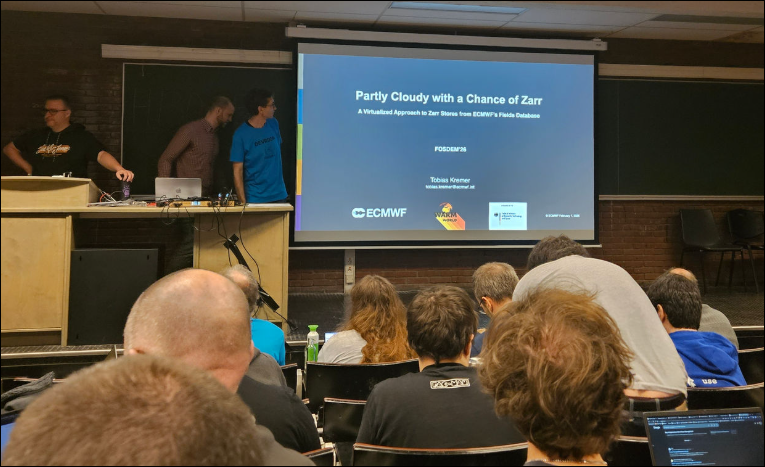
Partly Cloudy with a Chance of Zarr: A Virtualized Approach to Zarr Stores from ECMWF’s Fields Database
I have colleagues who work with weather forecasting data, and I’d heard about Zarr before entering this talk, but I have not used it myself. The virtualized approach that Tobias Kremer described, to have a view in front of the data, sounds like a good approach.
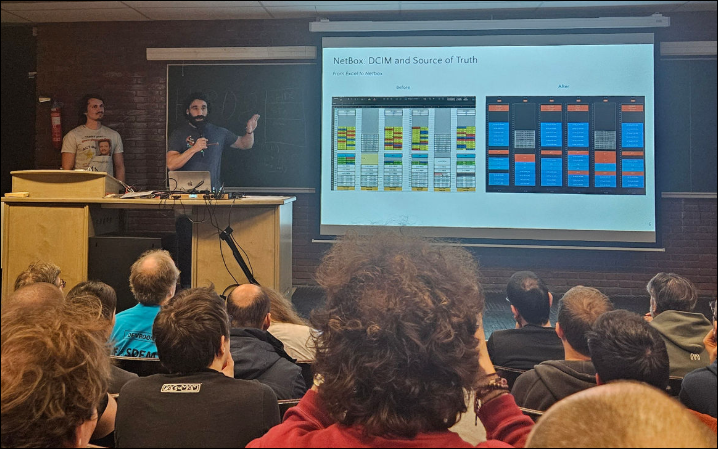
Zero‑Touch HPC Nodes: NetBox, Tofu and Packer for a Self‑Configuring SLURM Cluster
This was the talk in the HPC track that I was looking forward to the most, and I was not disappointed! Ümit and Leon described how they manage everything from the low-level hardware using Netbox, provisioning using Tofu (Terraform, but open) and Terragrunt, build images using Packer and Ansible, and how upon first boot they run on-device playbooks to finish the configuration of the machines - such as joining the SLURM cluster. I’m bringing much of this back to my day job! Someone in the audience also mentioned warewulf, which I hadn’t heard about before. That may be a good option to consider as well.
Nix and NixOS
I’m a big fan of Nix and NixOS, and was disappointed last year when I wasn’t able to get into the Nix developer room. Last year, a “normal classroom-sized” room was used for the Nix developer room, and upon arrival (a bit early, but not too early), the queue outside of the room was probably 100m+. This year however, the Nix developer room was held in a big auditorium, and I had no problems getting in. My slight complaint this year was the air quality in the room. I think the sun had stood against the auditorium (which had big windows) most of the morning, and I had to leave the room early to avoid getting a headache.
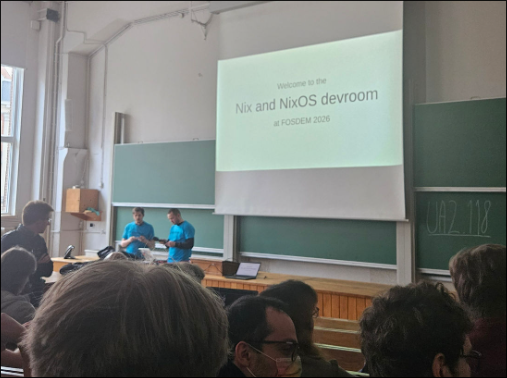
Nixpkgs Clarity: Correcting Nix package license metadata
Philippe Ombredanne has been working on figuring out exactly which license all of the software available through nixpkgs has. This is not an easy thing to work out. He showed several examples of “fun” licenses, such as having what seems to be the normal MIT license, but with a few words changed here and there. Slight changes to a license make it a completely new and different license, so we can’t say that software X is using the MIT license if it’s not EXACTLY the MIT license. This effort is important, and will benefit everyone in the Nix community, and he aims to also upstream this work so that the wider software community can benefit too.
libre.sh 9 years later, how Nix is used in an integrated platform powering digital sovereignty, Eilean: Self-hosted digital islands, TAPPaaS: A resilient, trusted, automated private cloud based on NixOS
I’m joining these together, as they were all about roughly the same thing: How to use NixOS to make it easier to serve applications, both for your own home and for organizations. I liked them all, and I appreciate the different effort and the variety of approaches here. I got inspired for how to improve my own homelab, which I wrote about in my Homelab State of the Union 2026 post.
Rust
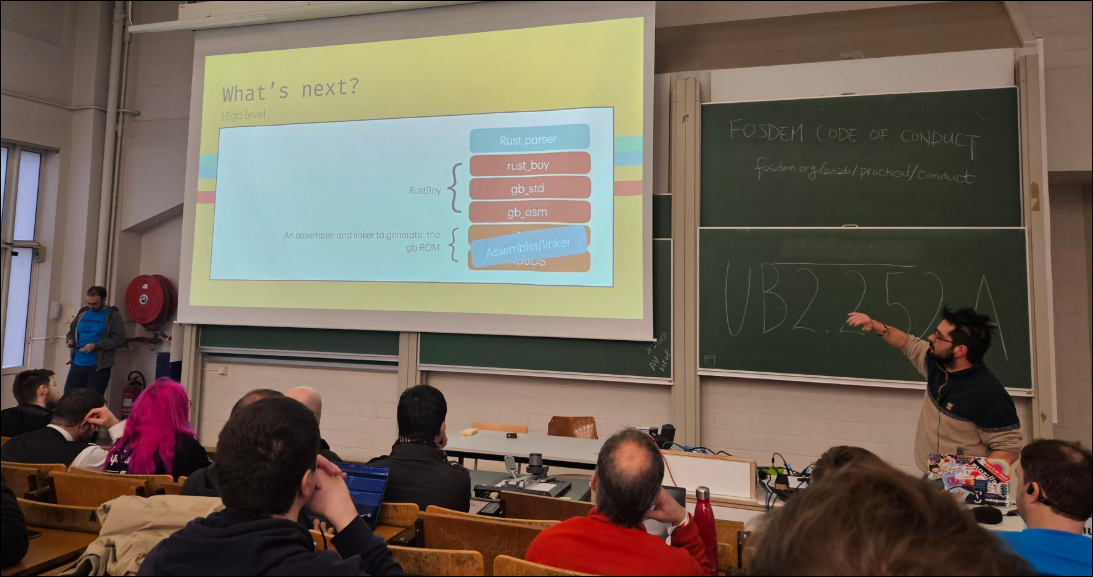
RustBoy: A Rust journey into Game Boy dev
This was a fun one. I’ve been looking for an excuse to learn and use Rust, and maybe this is it! Federico Bassini described the current state of the Game Boy, Game Boy Color, and Game Boy Advance development ecosystem. I’ve been wanting to create simple games for my kids, and my most likely option up until now was to use GB Studio, but maybe, just maybe, I need to learn Rust instead. I just got a new toy: ANBERNIC RG 34XX, which lets me play a ton of old GB games, and it would be very fun to run some of my own on that.
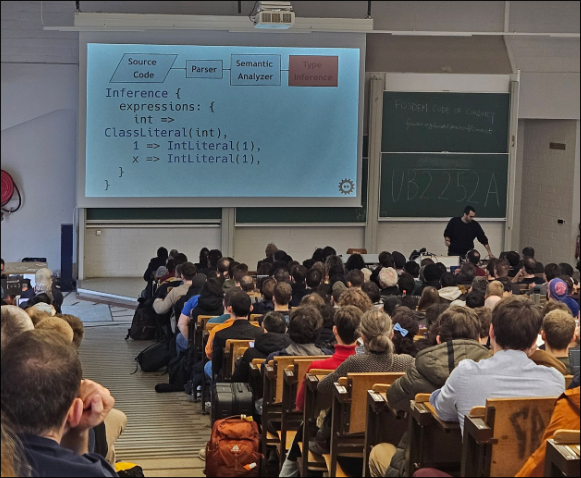
Ty: Adventures of type-checking Python in Rust
I like type systems. I would prefer to work in Haskell, F#, OCaml, Scala, or maybe Flix, rather than a more dynamic language such as Python. But I can’t deny that Python can be very productive, so the last years I’ve been happy to see the rise and popularity of tools such as mypy, pyright, black, ruff, ty, and the likes. Fast tools that make sure that your program is correct? Yes please! It was very interesting to see how the new Ty type checker represents Python types in Rust, and to hear considerations around how to figure out what types are meant to be.
Software Defined Storage
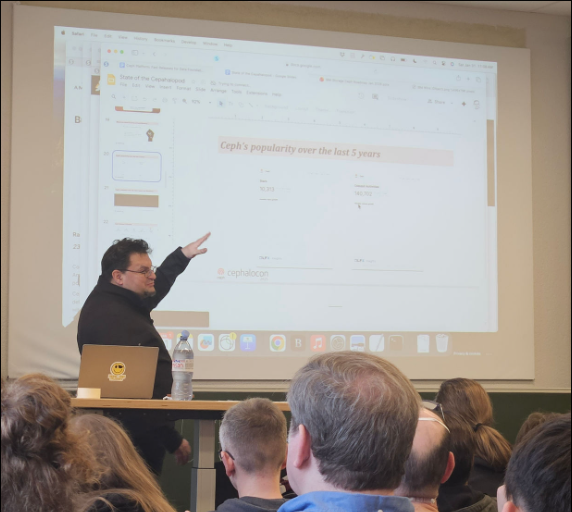
Ceph: State of the Cephalopod
This was the only talk I managed to catch from this track, although I had planned to stay in this room for a while. Federico Lucifredi took us through some interesting stats around CEPH usage, and talked about what’s to come. My laptop had broken down when this talk started, so I left the room after the talk to try to fix that.
Brussels
Visiting Brussels is very pleasant. We took the plane from Oslo, then the train from the Brussels Airport into the city center, and from the hotel we took the bus to and from the ULB Solbosch Campus. It’s easy to get around, there’s good food everywhere, and it was even easy to get tasty non-alcoholic beers.
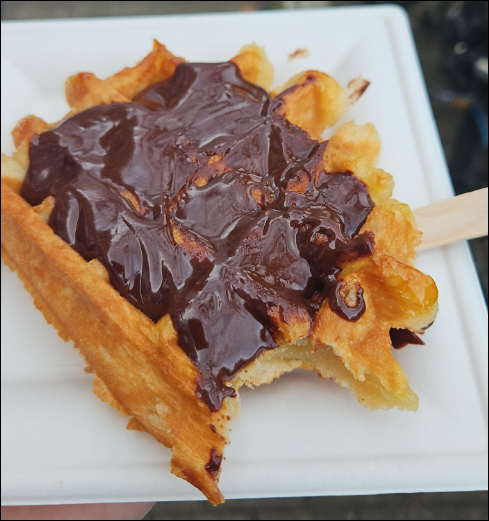
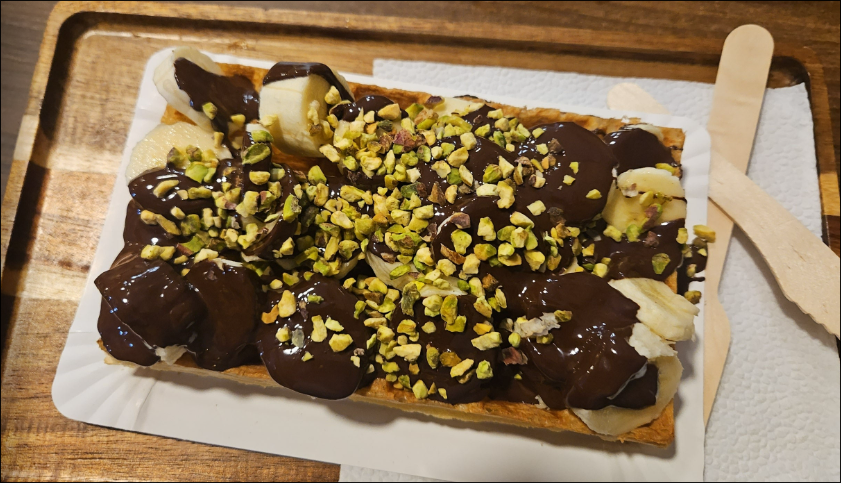
The waffles alone are worth the trip. They had several trucks selling them on campus at the conference, and they have many options in the city center as well.
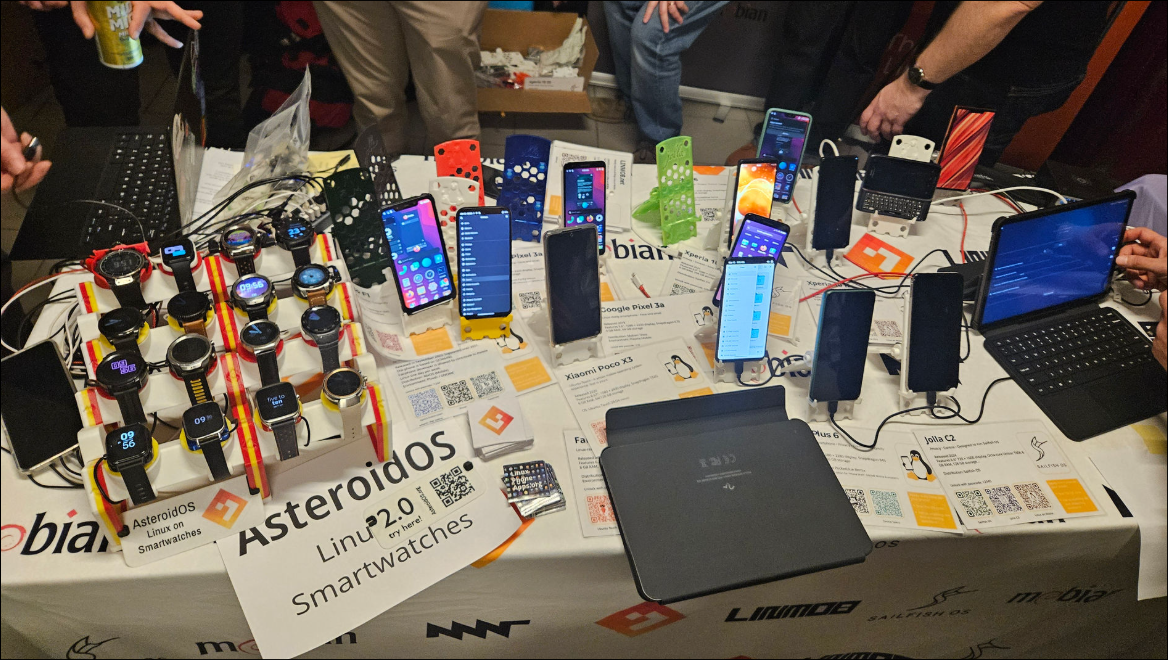
The FOSDEM stands are always fun to browse. Lots of stickers, t-shirts, and friendly people happy to chat about their projects.
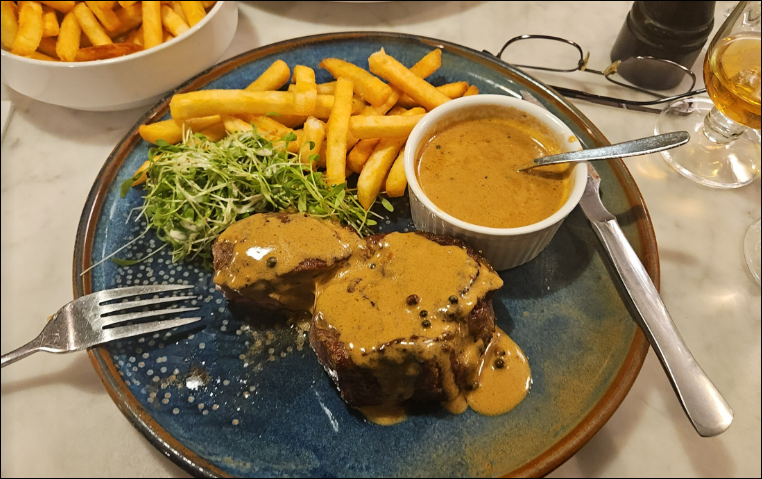
We also made sure to have a proper dinner out in the city. Brussels has no shortage of good restaurants, and it’s a great way to wind down after a full day of talks.
All in all, FOSDEM 2026 was a good one. I came home with a long list of things to try out, both for work and for fun. I’m already looking forward to next year.